
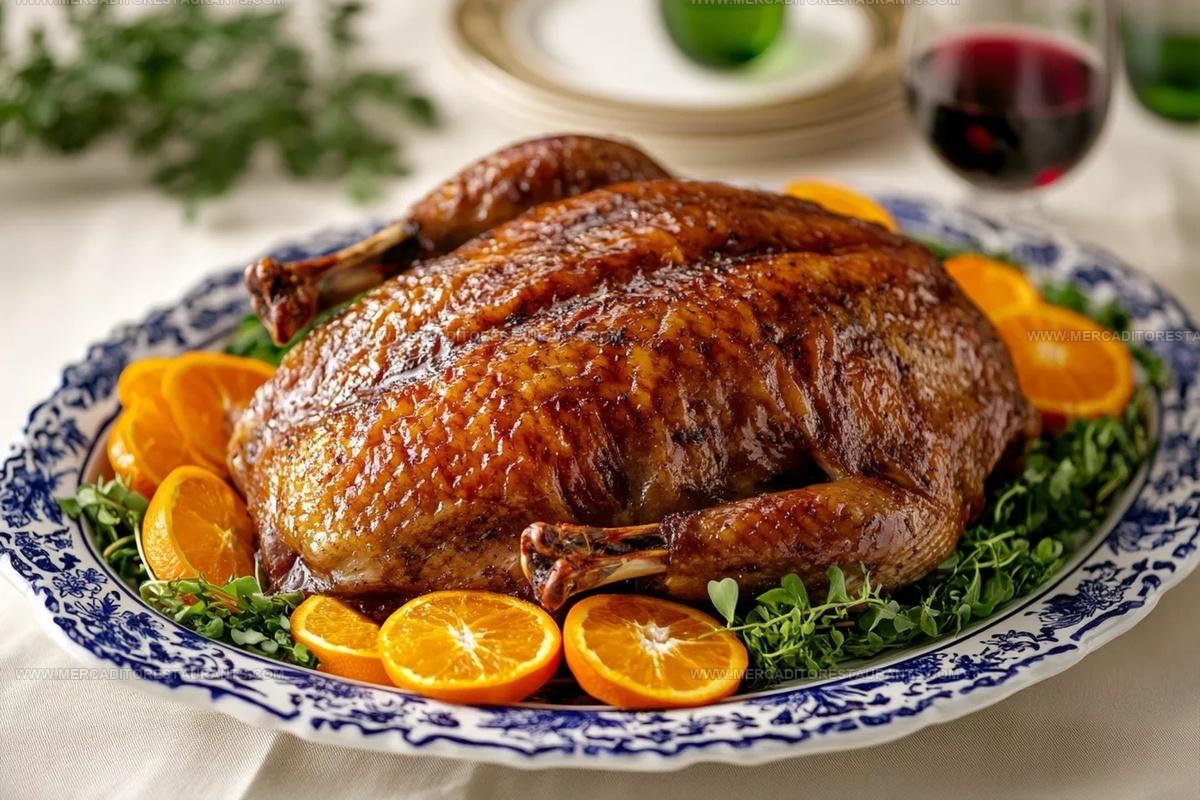
Roasted Duck A L’Orange Recipe With Citrus Glaze

Succulent roasted duck à l'orange stands as a classic French delicacy that promises pure gastronomic elegance.
Sophisticated palates have cherished this luxurious dish for generations, celebrating its rich culinary heritage.
Harmonious flavors dance between crispy, caramelized skin and tender meat, creating a sensory experience that transcends ordinary dining.
Stunning presentation makes this recipe perfect for special occasions where memorable meals become conversation centerpieces.
Professional chefs and passionate home cooks alike appreciate the delicate balance of techniques required to craft such an exquisite plate.
Winter dinner parties or romantic celebrations find their ultimate expression through this timeless recipe that whispers refined French tradition.
You'll be amazed how something so impressive can emerge from your own kitchen with careful attention and genuine passion.
What Makes Roasted Duck A Lorange A Must-Try
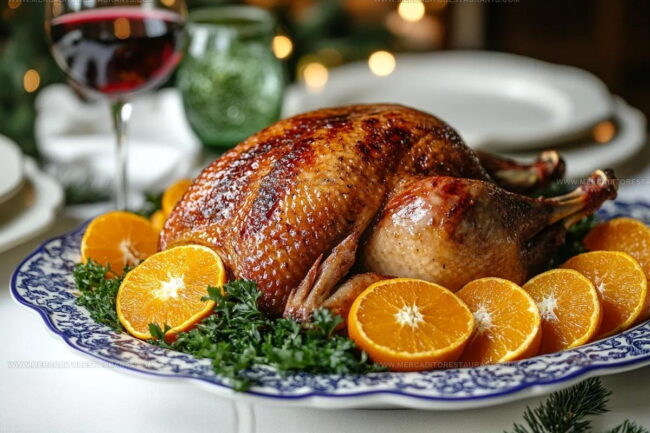
What Ingredients Do You Need For Roasted Duck A L’Orange
Poultry Ingredient:Duck Cavity Aromatics:Sauce Ingredients:Equipment For Roasted Duck A Lorange
Preparing Roasted Duck à l’Orange Step by Step
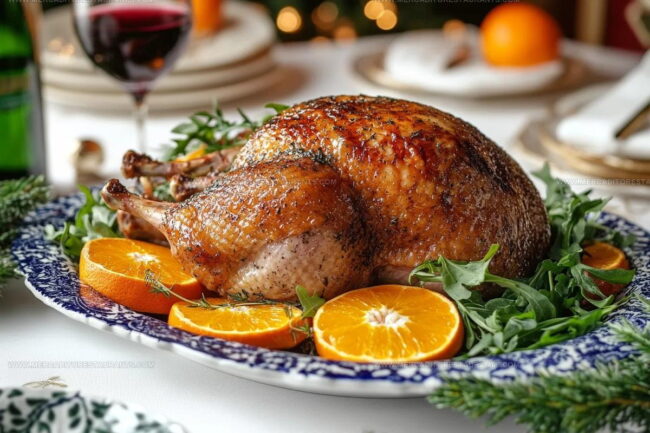
Prep the Duck
Crank up the oven to a toasty 375F. Grab your 4-5 pound duck and remove those giblets. Pat the duck dry with paper towels. Season the inside with a generous sprinkle of salt and pepper. Stuff the cavity with these tasty helpers:
Rub the outside skin with 2 teaspoons olive oil and add another light dusting of salt and pepper.
Position for Roasting
Set the duck on a rack inside a roasting pan, breast side up. This helps the fat drip away and makes the skin super crispy.
First Roasting Phase
Slide the duck into the preheated oven. Roast for 1 hour, letting the heat work its magic. Every 30 minutes, pull out the pan and baste the duck with its own delicious drippings.
Check Duck Temperature
After 1.5 hours, check the internal temperature with a meat thermometer. You want it to hit exactly 165F at the thickest part. This ensures your duck is perfectly cooked and safe to eat.
Rest and Relax
Once the duck reaches temperature, remove from the oven. Let it rest for 15 minutes – this helps the juices redistribute and makes carving easier.
Prepare Orange Sauce
While the duck rests, create the zesty sauce. In a saucepan, combine:
Simmer this mixture for 10-15 minutes until it starts to reduce.
Finish the Sauce
Add these final flavor boosters to your sauce:
Simmer for another 5-10 minutes. Stir in 1 tablespoon butter and season with salt and pepper.
Serve and Enjoy
Carve the duck into beautiful slices. Drizzle the orange sauce generously over the meat. If you want, garnish with fresh orange slices or a sprinkle of herbs.
How Do You Get The Best Results With Roasted Duck A Lorange
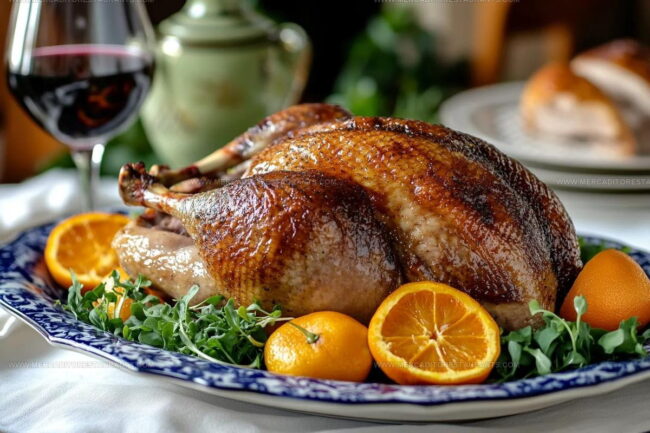
Alternate Versions Of Roasted Duck A Lorange
Best Serving Companions For Roasted Duck A Lorange
Best Storage Method For Roasted Duck With Orange
Questions Readers Often Ask About Roasted Duck A Lorange
Can I use a different citrus instead of orange?
Absolutely! Tangerines or blood oranges work beautifully in this recipe. The key is selecting a sweet, juicy citrus that complements the rich duck meat.
What makes the duck skin crispy?
Salt and thorough drying are crucial. Pat your duck completely dry before roasting, and make sure to season the skin generously with salt to help draw out moisture and create that perfect golden crackle.
How do I know the duck is cooked perfectly?
Check the internal temperature with a meat thermometer. When it hits 165F in the thickest part of the thigh, your duck is safely cooked and will be tender and delicious.
Can I prepare the orange sauce ahead of time?
Definitely! The sauce can be made earlier and gently reheated when your duck is ready. Store it covered in the refrigerator for up to two days.
What if I don’t have Grand Marnier?
No worries. You can skip it or substitute with another orange liqueur like Cointreau. The sauce will still be flavorful and delicious.
Should the duck be room temperature before roasting?
Yes, letting the duck sit out for about 30 minutes before roasting helps it cook more evenly and ensures a more consistent result.
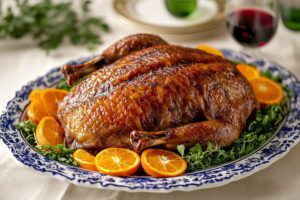
Roasted Duck A Lorange Recipe
- Total Time: 2 hours to 2 hours 40 minutes
- Yield: 4 1x
Description
Roasted Duck à l’Orange brings French culinary magic straight to your dinner table with tender, crispy-skinned duck glazed in a tangy citrus sauce. Perfecting this classic French dish requires patience and technique, but the delicious results will make your guests think you trained in Paris.
Ingredients
Main Ingredients:
- 1 whole duck
- 1 cup orange juice
- ½ cup chicken stock
Aromatics and Seasonings:
- 2 tablespoons sugar
- 23 sprigs fresh thyme
- ½ onion
- 1 orange
- Salt and pepper
Supporting Ingredients:
- 2 teaspoons olive oil
- 2 tablespoons white wine vinegar
- ¼ cup Grand Marnier
- 1 tablespoon honey
- 1 tablespoon butter
Instructions
- Remove the duck from refrigeration 30 minutes before cooking. Pat the entire 4-5 pound duck completely dry using paper towels, ensuring no moisture remains on the skin.
- Preheat your oven to precisely 375°F. Generously season the duck’s interior cavity with 1 teaspoon salt and ½ teaspoon black pepper.
- Stuff the duck’s cavity with ½ quartered onion, 1 halved orange, and 2-3 fresh thyme sprigs. Tuck herbs and aromatics snugly inside.
- Brush the duck’s exterior skin with 2 teaspoons olive oil. Sprinkle an additional 1 teaspoon salt and ½ teaspoon pepper across the surface.
- Position the duck breast-side up on a roasting rack inside a deep roasting pan. This allows fat to drip away during cooking.
- Roast the duck at 375°F for exactly 90 minutes, rotating the pan halfway through cooking to ensure even browning.
- Check the internal temperature with a meat thermometer. Remove from oven when it reaches 165°F at the thickest part of the thigh.
- Transfer the duck to a cutting board. Allow it to rest for 15 minutes before carving to retain juices.
- For the sauce, combine 1 cup orange juice, ½ cup chicken stock, and 2 tablespoons sugar in a saucepan over medium heat.
- Simmer the sauce for 12-15 minutes until it reduces by one-third. Stir occasionally to prevent burning.
- Add 2 tablespoons white wine vinegar and ¼ cup Grand Marnier. Continue simmering for 5 more minutes.
- Finish the sauce by whisking in 1 tablespoon cold butter. Season with salt and pepper to taste.
- Slice the duck against the grain. Drizzle warm orange sauce directly over the carved meat before serving.
Notes
- Choose a duck with a good layer of fat for the juiciest, most flavorful roast, which helps keep the meat moist during cooking.
- Prick the duck skin all over before roasting to help render fat and create a crispy, golden exterior that’ll make your guests swoon.
- For a lighter version, remove the duck skin before serving to reduce calories and fat content, making it suitable for those watching their intake.
- Save the rendered duck fat for roasting potatoes or vegetables – it adds incredible depth of flavor to future dishes and reduces kitchen waste.
- Prep Time: 15 minutes
- Cook Time: 1 hour 45 minutes to 2 hours 25 minutes
- Category: Roasted
- Method: Roasting
- Cuisine: French
Nutrition
- Serving Size: 4
- Calories: 64 kcal
- Sugar: 1.2 g
- Sodium: 90 mg
- Fat: 3.4 g
- Saturated Fat: 0.8 g
- Unsaturated Fat: 2.4 g
- Trans Fat: 0 g
- Carbohydrates: 3.5 g
- Fiber: 0.1 g
- Protein: 6.2 g
- Cholesterol: 25 mg
Isabella Romero
Hospitality & Beverage Editor
Expertise
Cocktail Culture, Tequila and Mezcal Knowledge, Guest Experience Writing, Restaurant Trends, Event Dining Guides
Education
- Program: B.A. in Hospitality Management
- Focus: Studied hospitality through a program built around theory and application, with practical preparation for restaurant and guest-experience careers in Chicago’s hospitality industry.
Wine & Spirit Education Trust (WSET)Isabella brings together cocktails, food culture, social dining, and the thoughtful details that make a meal feel memorable. Her content blends atmosphere, flavor, and hospitality in a warm, polished style that helps readers connect with the full dining experience, from the first sip to the last bite.