
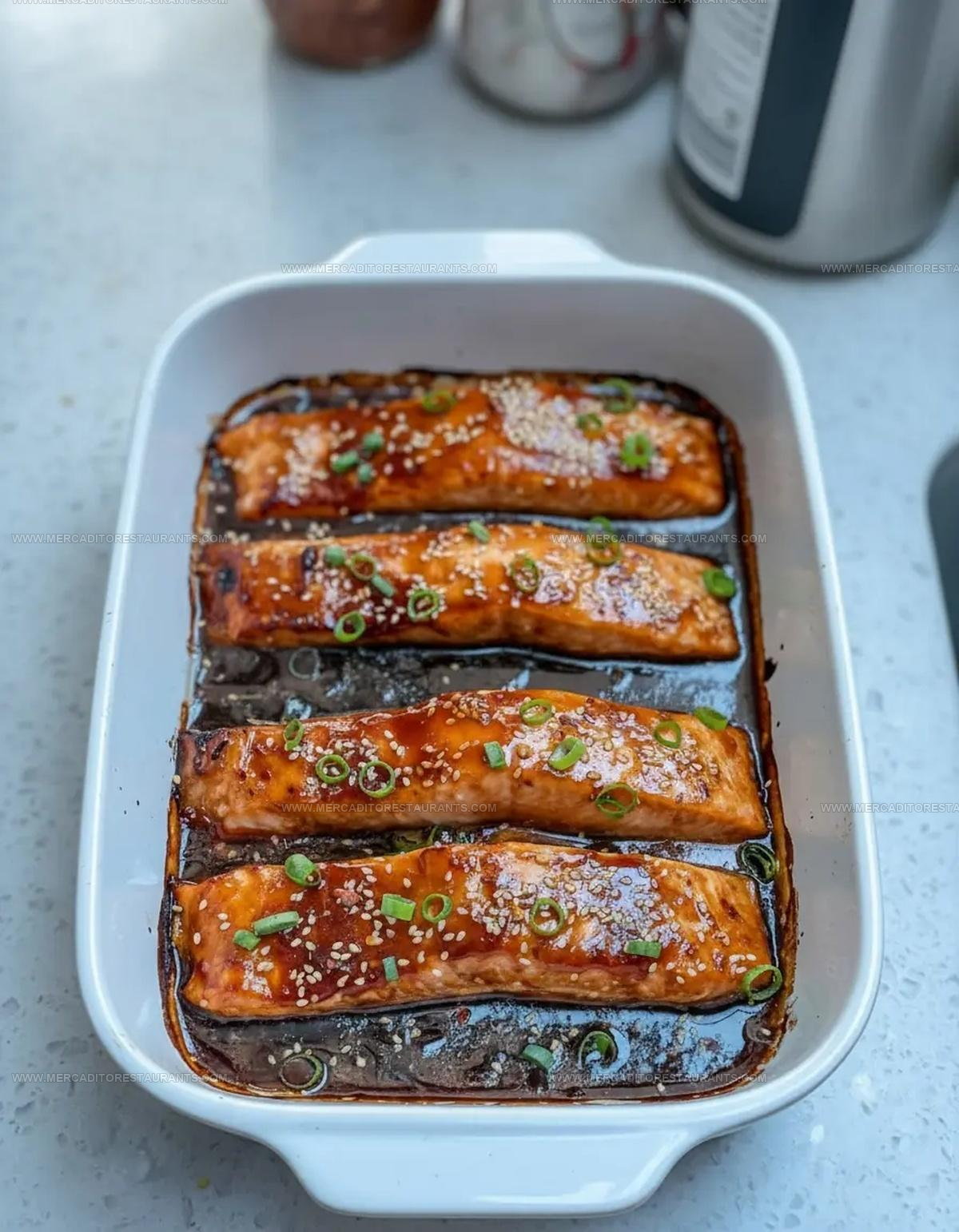
Citrus-Glazed Baked Teriyaki Salmon Recipe

Baked Teriyaki Salmon Recipe for a Flavorful Weeknight Dinner

Succulent teriyaki salmon promises a delightful seafood experience that captures the essence of Japanese-inspired cuisine.

Seafood enthusiasts and home cooks will adore this simple yet sophisticated dish that transforms an ordinary dinner into something extraordinary.

Marinating techniques infuse rich, complex flavors that dance across your palate with remarkable depth and balance.

Pacific Northwest salmon serves as the perfect canvas for this umami-packed preparation that feels both comforting and elegant.

Mediterranean and Asian culinary influences merge seamlessly in this recipe, creating a harmonious blend of tastes that feels simultaneously familiar and exciting.

Protein-packed and nutritious, salmon provides a heart-healthy option for those seeking delicious meals without compromising wellness goals.

Grab your apron and prepare to impress dinner companions with a restaurant-worthy dish that comes together with minimal effort and maximum satisfaction.

Why Baked Teriyaki Salmon Always Works
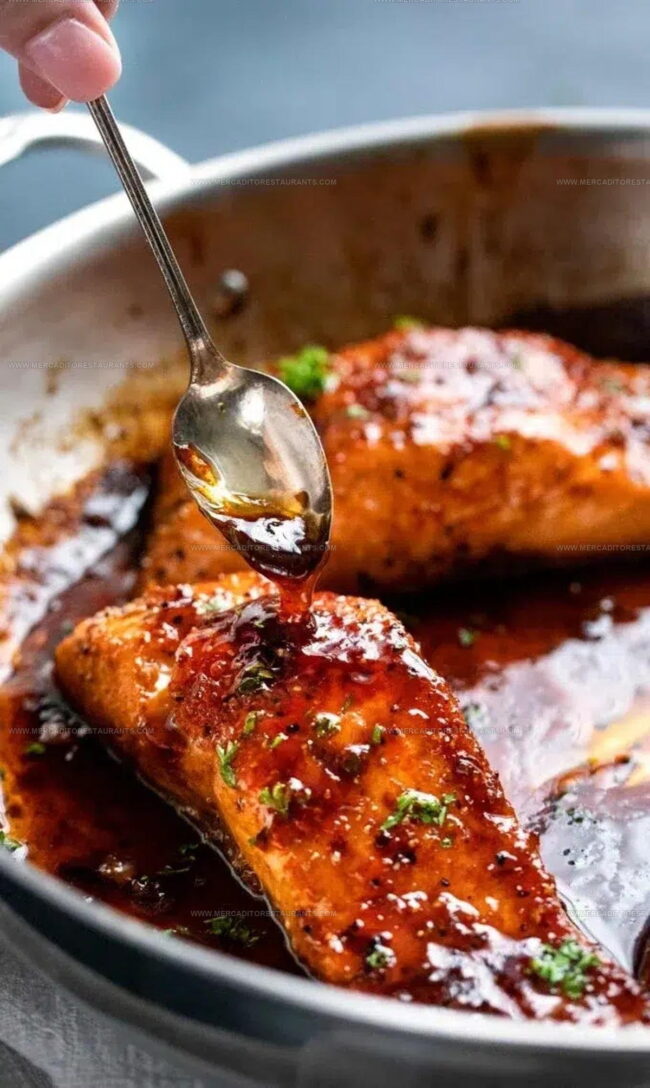
Why Baked Teriyaki Salmon Always Works
  • Quick Weeknight Winner: This salmon saves your dinner when time is tight, giving you a restaurant-quality meal without complicated steps or tons of dishes to clean.
  • Flavor Explosion: The homemade teriyaki sauce packs such complex tastes that your family will think you’ve been cooking all afternoon, but it comes together faster than ordering takeout.
  • Healthy Protein Power: Salmon delivers amazing nutrients, and baking keeps everything lean while locking in moisture so each bite stays tender and delicious.
  • Simple Ingredient Swap: The gluten-free flour makes this recipe super accessible for friends with dietary restrictions, meaning everyone can enjoy a fantastic meal together.

What You’ll Need for Baked Teriyaki Salmon

Main Protein:
  • Salmon Fillets (4 skinless, about 6 oz each): These beautiful fish fillets are the star of your dinner, delivering rich omega-3 nutrients and a delicate texture.
Teriyaki Sauce Components:
  • Low-sodium Soy Sauce (⅓ Cup): Provides the essential salty base that defines teriyaki flavor.
  • Fresh Orange Juice (¼ Cup): Adds a bright, sweet-tangy dimension to balance the sauce.
  • Honey (2 tablespoons): Creates a subtle sweetness that caramelizes beautifully during baking.
  • Garlic Cloves (2, minced): Brings a warm, aromatic depth to the sauce.
  • Fresh Ginger (1 tablespoon, minced): Introduces a zingy, slightly spicy undertone.
  • Lemon Juice (½ Lemon): Brightens the entire dish with a fresh citrus note.
Supporting Ingredients:
  • Water (2-3 tablespoons): Helps adjust sauce consistency.
  • Chili Flakes (1 teaspoon): Adds a gentle heat that wakes up the salmon.
  • Gluten-free Flour (½ tablespoon): Helps thicken the sauce for perfect coating.
Garnish:
  • Green Onion (1, sliced): Provides a fresh, crisp finish.
  • Sesame Seeds (1 tablespoon): Adds a nutty crunch and visual appeal.

Prep Tools For This Teriyaki Salmon

  • Measuring Cup Set: Essential for accurately measuring soy sauce, honey, and other liquid ingredients without messy spills.
  • Whisk (8-inch): Perfect for blending teriyaki sauce ingredients smoothly and breaking up any flour or honey clumps.
  • Small Mixing Bowl: Great for combining sauce ingredients and ensuring everything is well incorporated before pouring over your salmon.
  • Baking Dish (9×13 inch): Allows your salmon to cook evenly and catch all the delicious teriyaki sauce during baking.
  • Measuring Spoons: Helps you precisely add chili flakes, ginger, and other small ingredient quantities.
  • Sharp Kitchen Knife: Needed for mincing garlic, slicing green onions, and preparing fresh ingredients.
  • Cutting Board: Provides a clean surface for chopping and preparing your salmon and garnishes.
  • Basting Spoon: Useful for spooning thickened sauce over salmon after baking for extra flavor.
  • Non-stick Cooking Spray: Ensures your salmon doesn’t stick to the baking dish and makes cleanup easier.

Making Baked Teriyaki Salmon From Start To Finish
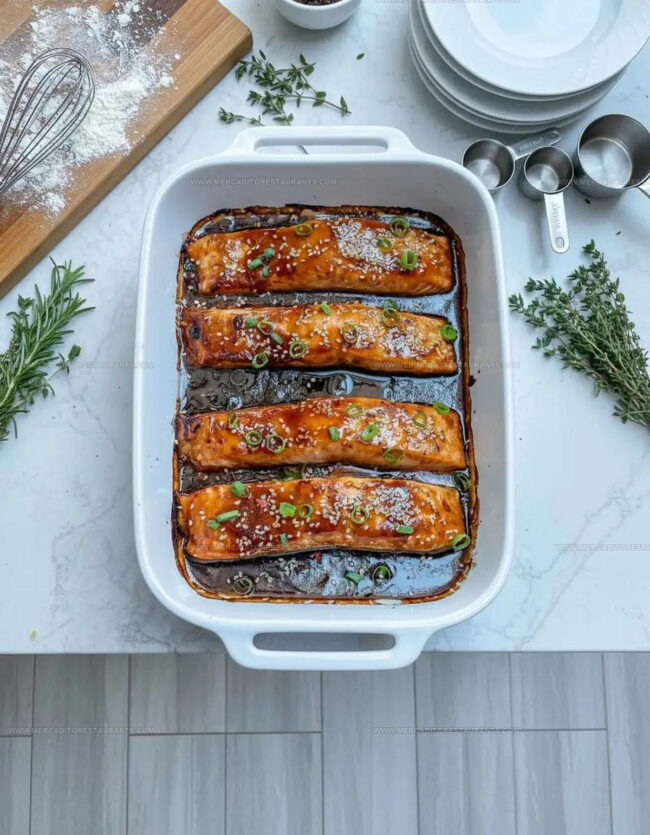
Making Baked Teriyaki Salmon From Start To Finish
1

Mix Teriyaki Sauce

Grab a small bowl and whisk together the sauce ingredients:

  • ⅓ cup low-sodium soy sauce
  • ¼ cup fresh orange juice
  • 2-3 tablespoons water
  • 2 tablespoons honey
  • 2 minced garlic cloves
  • 1 tablespoon minced fresh ginger
  • 1 teaspoon chili flakes
  • Juice from ½ lemon
  • ½ tablespoon gluten-free flour

Blend everything until smooth and well combined.

2

Prepare Baking Dish

Spray a baking dish with non-stick cooking spray. Place the 4 salmon fillets in the dish, spreading them out evenly.

3

Add Sauce and Bake

Pour the teriyaki sauce completely over the salmon fillets. Slide the dish into a preheated oven at 400°F. Bake for 12-15 minutes until the salmon becomes flaky and fully cooked through.

4

Final Touches

Remove the salmon from the oven. Spoon the thickened sauce from the baking dish over the fish. Sprinkle 1 tablespoon sesame seeds and 1 sliced green onion on top as a fresh garnish.

5

Serve

Transfer the salmon to serving plates, making sure each piece gets a generous coating of the teriyaki sauce.

Things Worth Knowing For Baked Teriyaki Salmon

  • Whisk the teriyaki sauce ingredients thoroughly to blend flavors and ensure no lumps remain.
  • Arrange salmon fillets with some space between them for even cooking and sauce coverage.
  • Check salmon at 12 minutes – thinner fillets cook faster, and overcooked fish becomes dry and tough.
  • After baking, let the sauce rest for a minute to naturally thicken and become more glossy on your salmon.
  • Sprinkle sesame seeds and green onions just before serving to maintain their fresh crunch and bright color.

Easy Variations for Baked Teriyaki Salmon

  • Teriyaki Tofu Edition: Swap salmon with firm tofu, pressing and cutting into thick slabs before marinating and baking at the same temperature for 15-18 minutes.
  • Gluten-Free Friendly: Replace soy sauce with tamari and ensure gluten-free flour is used, keeping all other ingredients and measurements exactly the same.
  • Spice-Reduced Version: Skip chili flakes completely or reduce to just a pinch if your taste buds prefer milder flavors, maintaining all other sauce ingredients as written.
  • Asian-Inspired Chicken Alternative: Use boneless chicken breasts instead of salmon, adjusting baking time to 20-25 minutes or until chicken reaches 165°F internal temperature.

Serving Suggestions for This Recipe: Teriyaki Salmon

  • Perfect Side Dish: Serve this salmon over steamed jasmine rice to soak up the delicious teriyaki sauce and create a complete meal.
  • Quick Vegetable Pairing: Roast some broccoli or asparagus alongside the salmon for a quick, colorful green vegetable that complements the fish’s rich flavor.
  • Wine Selection: Pour a crisp, chilled Pinot Grigio or Sauvignon Blanc to balance the sweet and tangy teriyaki sauce with your salmon.
  • Garnish Tip: Sprinkle extra sesame seeds and sliced green onions right before serving to add a fresh crunch and bright pop of color to your dish.

Proper Recipe Storage for Baked Teriyaki Salmon

  • Refrigerate leftover salmon in an airtight container for up to 2 days, keeping the sauce separate to prevent the fish from getting soggy.
  • Cool the salmon completely before storing to prevent condensation and maintain the best texture when reheating.
  • Wrap individual portions in plastic wrap or aluminum foil if sending salmon in a lunch, which helps keep the fish moist and fresh.
  • Freeze salmon without the sauce in a freezer-safe container for maximum 3 weeks, thawing overnight in the refrigerator before gently reheating.

Frequently Asked Questions About Baked Teriyaki Salmon

FAQ

Can I use frozen salmon for this recipe?

Thaw salmon completely before baking. Pat it dry with paper towels to remove excess moisture for the best results.

FAQ

What if I do not have gluten-free flour?

Regular all-purpose flour works perfectly fine as a sauce thickener. Just use the same amount in the teriyaki sauce.

FAQ

How do I know when salmon is fully cooked?

Check for an internal temperature of 145 degrees Fahrenheit. The fish should flake easily with a fork and appear opaque throughout.

FAQ

Is this recipe spicy?

The chili flakes provide a mild warmth. Reduce or remove them if your spice tolerance is low.

FAQ

Can salmon be prepared ahead of time?

Prepare the teriyaki sauce and place salmon in the baking dish up to 24 hours in advance. Cover and refrigerate until ready to bake.

FAQ

What side dishes pair well with this salmon?

Steamed rice, roasted vegetables, or quinoa complement the teriyaki flavors nicely.
Print
clock clock iconcutlery cutlery iconflag flag iconfolder folder iconinstagram instagram iconpinterest pinterest iconfacebook facebook iconprint print iconsquares squares iconheart heart iconheart solid heart solid icon
Citrus-Glazed Baked Teriyaki Salmon Recipe

Citrus-Glazed Baked Teriyaki Salmon Recipe


5 Stars 4 Stars 3 Stars 2 Stars 1 Star

4.8 from 15 reviews

  • Total Time: 22-25 minutes
  • Yield: 4 1x

Description

Baked Teriyaki Salmon brings restaurant-quality seafood right to your dinner table with minimal effort and maximum flavor. Glazed with a sweet and savory Japanese-inspired sauce, this salmon dish delivers a delightful meal that’ll have your family asking for seconds.


Ingredients

Scale

Proteins:

  • 4 Salmon Fillets

Teriyaki Sauce Components:

  • ⅓ Cup Low-sodium soy sauce
  • ¼ Cup Fresh orange juice
  • 2 Tablespoons Honey
  • 23 Tablespoons Water
  • ½ Lemon (juiced)

Seasonings and Garnishes:

  • 2 Garlic Cloves
  • 1 Tablespoon Minced fresh ginger
  • 1 Tablespoon Sesame seeds
  • 1 Teaspoon Chili flakes
  • ½ Tablespoon Gluten-free flour
  • 1 Green onion

Instructions

  1. Combine ⅓ cup soy sauce, ¼ cup orange juice, 2-3 tablespoons water, 2 tablespoons honey, 2 minced garlic cloves, 1 tablespoon minced ginger, 1 teaspoon chili flakes, ½ lemon’s juice, and ½ tablespoon gluten-free flour in a small bowl. Whisk these ingredients until smooth and well-blended.
  2. Preheat your oven to 400°F and lightly spray a baking dish with non-stick cooking spray.
  3. Arrange 4 skinless salmon fillets (6 oz each) in the prepared baking dish, ensuring they are not overlapping.
  4. Carefully pour the teriyaki sauce over the salmon, making sure each fillet is evenly coated.
  5. Slide the baking dish into the preheated oven and bake for 12-15 minutes, until the salmon becomes flaky and reaches an internal temperature of 145°F.
  6. Remove the salmon from the oven and let it rest for 2-3 minutes to allow the sauce to thicken slightly.
  7. Spoon the reduced sauce from the baking dish over the salmon fillets.
  8. Sprinkle 1 tablespoon sesame seeds and 1 sliced green onion over the top as a fresh, crunchy garnish.

Notes

  • Let the salmon marinate in the teriyaki sauce for 15-30 minutes before baking to enhance flavor absorption and tenderness.
  • Check salmon doneness by using a fork to see if it easily flakes – overcooked fish becomes dry and tough.
  • For a gluten-free version, ensure soy sauce is certified gluten-free and replace regular flour with cornstarch or arrowroot powder.
  • Swap salmon for another fish like cod or halibut if preferred, adjusting cooking time based on fillet thickness.
  • Prep Time: 10 minutes
  • Cook Time: 12-15 minutes
  • Category: Baked
  • Method: Baking
  • Cuisine: Japanese

Nutrition

  • Serving Size: 4
  • Calories: 300 kcal
  • Sugar: 10 g
  • Sodium: 500 mg
  • Fat: 15 g
  • Saturated Fat: 3 g
  • Unsaturated Fat: 11 g
  • Trans Fat: 0 g
  • Carbohydrates: 12 g
  • Fiber: 1 g
  • Protein: 34 g
  • Cholesterol: 70 mg
Daniel Navarro

Daniel Navarro

Culinary Content Director

Expertise

Mexican-inspired Menus, Seasonal Restaurant Specials, Shared Plate Dining, Tequila Pairings, Chef-driven Recipes

Education

City Colleges of Chicago
  • Program: Culinary Arts, Associate in Applied Science
  • Focus: Trained in hands-on food production in a commercial food-service setting, with coursework that covers culinary technique, ethnic and classical menus, business planning, cost control, and merchandising.

Daniel writes about bold flavors, chef-driven dishes, and the kind of restaurant moments that turn tacos, mezcal, and shared plates into a night worth repeating.

Leave a Reply

Your email address will not be published. Required fields are marked *

Recipe rating 5 Stars 4 Stars 3 Stars 2 Stars 1 Star