
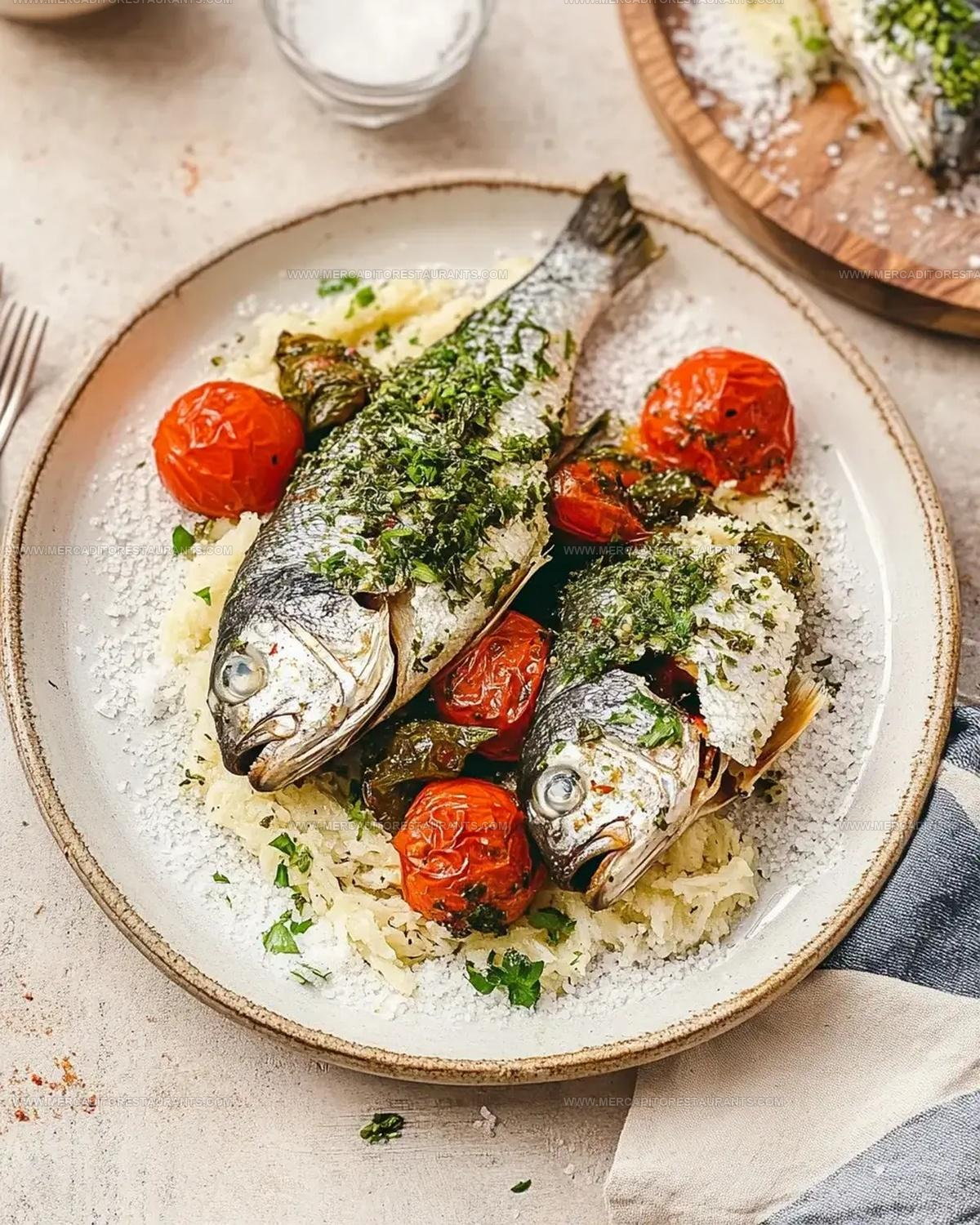
Baked Whole Fish in Salt Crust Recipe That Locks in Moisture

Succulent baked whole fish salt crust offers a stunning seafood experience that feels luxurious yet surprisingly simple.
Mediterranean cooking techniques transform ordinary fish into an extraordinary dinner centerpiece that impresses everyone around the table.
Professional chefs have long treasured this method for preserving delicate fish textures and intensifying natural flavors.
Salt crusting seals moisture while infusing subtle seasoning directly into the flesh during baking.
Remarkable presentation ensures your dinner becomes a conversation starter that looks far more complicated than its actual preparation.
Elegant yet uncomplicated, this technique works perfectly for special occasions or weekend cooking adventures.
Seafood lovers will adore how dramatically a salt crust can enhance the natural sweetness and tenderness of fresh fish.
Why Is Baked Whole Fish Salt Crust Worth Trying
What Ingredients You Need for Baked Whole Fish Salt Crust
Main Fish Ingredient:Salt Crust Ingredients:Flavor Enhancers:Standard Cooking Tools for Baked Whole Fish Salt Crust
Cooking Method for Baked Whole Fish in Salt Crust
Prepare the Oven
Crank the oven up to 450°F and grab a baking sheet. Line it with parchment paper so nothing sticks.
Create Salt Mixture
Grab a large bowl and mix 3 cups of coarse sea salt with 1 cup of egg whites (about 6 large eggs). Keep stirring until the salt feels like wet sand that clumps together easily.
Build Salt Base
Spread half of your salt mixture onto the parchment paper, creating a flat bed for your fish. Make sure it’s even and about the same shape as your fish.
Prepare the Fish
Grab your 2 to 3 pound whole fish and get ready to dress it up. Drizzle 1 tablespoon of olive oil over the fish. Sprinkle some freshly ground black pepper to give it extra flavor.
Stuff and Season
Take your 1 lemon and slice it up. Stuff the fish cavity with lemon slices and 1 tablespoon of fresh chopped herbs like thyme or rosemary. These will infuse delicious flavors into the fish.
Salt Crust Covering
Carefully place the fish on top of the salt base you created. Now take the remaining salt mixture and completely cover the fish. Press down firmly so the salt forms a solid, tight crust around the entire fish.
Bake the Fish
Slide the baking sheet into the 450°F oven. Bake for 25 to 30 minutes. The salt crust will turn hard and look like a beautiful protective shell.
Rest and Serve
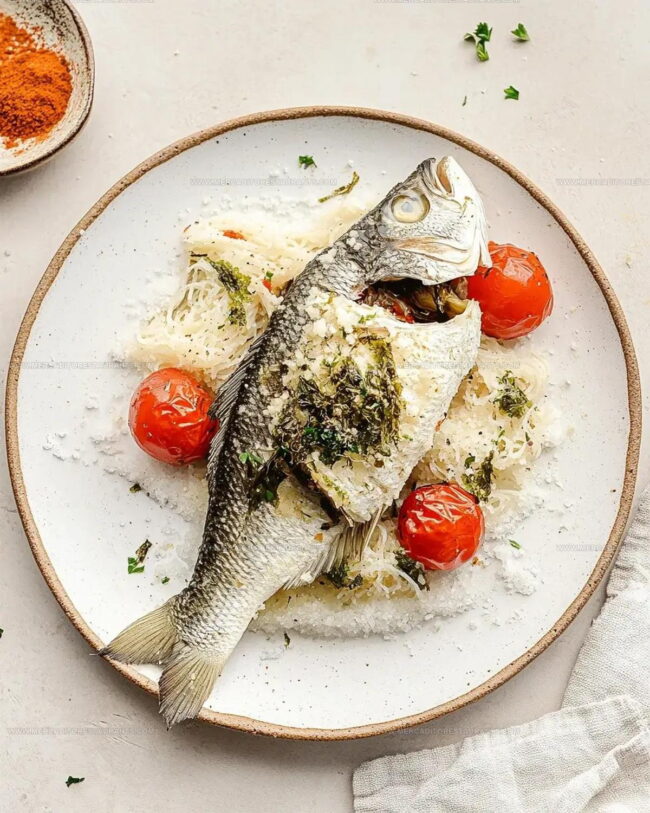
After baking, let the fish rest for 5 minutes. Crack open the salt crust carefully and remove the fish. The meat should be perfectly cooked and ready to enjoy with your favorite sides.
Important Notes For Baked Whole Fish In Salt Crust
What Other Versions Work for Baked Whole Fish Salt Crust
Presentation Notes for Baked Whole Fish in Salt Crust
Best Storage Practices For Baked Whole Fish Salt Crust
Baked Whole Fish Salt Crust Questions And Answers
What type of fish works best for this salt crust method?
Sea bass, red snapper, or whole branzino are perfect because they have firm, delicate flesh that stays moist under the salt crust.
How do I know the fish is fully cooked without seeing it?
The salt crust turns rock hard when the fish reaches 145°F internal temperature, which signals complete cooking.
Can salt crust cooking prevent the fish from becoming too salty?
Absolutely! The salt forms a protective shell that seasons without oversalting the delicate fish meat.
Do I eat the salt crust after baking?
No, the salt crust is completely removed before serving – it’s just a cooking method to seal in moisture and flavor.
What happens if the salt crust cracks during baking?
A small crack is okay and won’t affect the cooking process – the fish will still steam perfectly inside the salt shell.
Is this cooking method difficult for beginners?
Salt crust baking looks complicated but is surprisingly straightforward and creates restaurant-quality results with minimal effort.
Baked Whole Fish Salt Crust Recipe
- Total Time: 40-45 minutes
- Yield: 4 1x
Description
Mediterranean salt-crusted whole fish brings pure seaside magic straight to your dinner table. Cracking open this golden-brown salt shell reveals tender, perfectly seasoned fish that transports your palate to coastal Greece in mere moments.
Ingredients
Main Ingredients:
- 2 to 3 pounds whole fish (such as snapper or trout, cleaned and scaled)
Supporting Ingredients:
- 3 cups coarse sea salt
- 1 cup egg whites (about 6 large eggs)
Aromatics and Seasonings:
- 1 tablespoon fresh herbs (such as thyme or rosemary, chopped)
- 1 lemon
- 1 tablespoon olive oil
- Freshly ground black pepper
Instructions
- Preheat the oven to 450°F and line a baking sheet with parchment paper. This high temperature will help create a perfect cooking environment for the fish.
- Mix 3 cups of coarse sea salt with 1 cup of egg whites in a large bowl until the mixture feels like damp sand. Your goal is an even, moist texture that will form a solid crust.
- Spread half the salt mixture on the parchment paper, creating a flat base for your fish that will support it during baking.
- Stuff the fish’s cavity with lemon slices and 1 tablespoon of chopped fresh herbs. This will infuse delicate flavor into the meat while cooking.
- Drizzle 1 tablespoon of olive oil over the fish and season with freshly ground black pepper to enhance its natural taste.
- Gently place the fish on top of the prepared salt bed, ensuring it’s centered and stable.
- Cover the entire fish with the remaining salt mixture, pressing firmly to create a complete, sealed crust that will lock in moisture.
- Bake at 450°F for 25-30 minutes until the salt crust becomes hard and the fish is completely cooked through.
- Remove from the oven and let the fish rest for 5 minutes to allow the juices to redistribute.
- Carefully crack open the salt crust using a small hammer or the back of a knife, revealing the perfectly cooked fish underneath.
- Transfer the fish to a serving platter and serve immediately with your favorite accompaniments.
Notes
- Salt forms a protective barrier that steams and seasons the fish while keeping it incredibly moist during baking.
- Choose a fresh, whole fish with clear eyes and firm flesh for the best results.
- Breaking open the salt crust tableside creates a dramatic and impressive presentation for dinner guests.
- If preparing for gluten-free or low-carb diets, this method works perfectly without any recipe modifications.
- Prep Time: 15 minutes
- Cook Time: 25-30 minutes
- Category: Baked
- Method: Baking
- Cuisine: Mediterranean
Nutrition
- Serving Size: 4
- Calories: 150 kcal
- Sugar: 0 g
- Sodium: 900 mg
- Fat: 5 g
- Saturated Fat: 1 g
- Unsaturated Fat: 4 g
- Trans Fat: 0 g
- Carbohydrates: 1 g
- Fiber: 0 g
- Protein: 26 g
- Cholesterol: 80 mg
Daniel Navarro
Culinary Content Director
Expertise
Mexican-inspired Menus, Seasonal Restaurant Specials, Shared Plate Dining, Tequila Pairings, Chef-driven Recipes
Education
Daniel writes about bold flavors, chef-driven dishes, and the kind of restaurant moments that turn tacos, mezcal, and shared plates into a night worth repeating.