
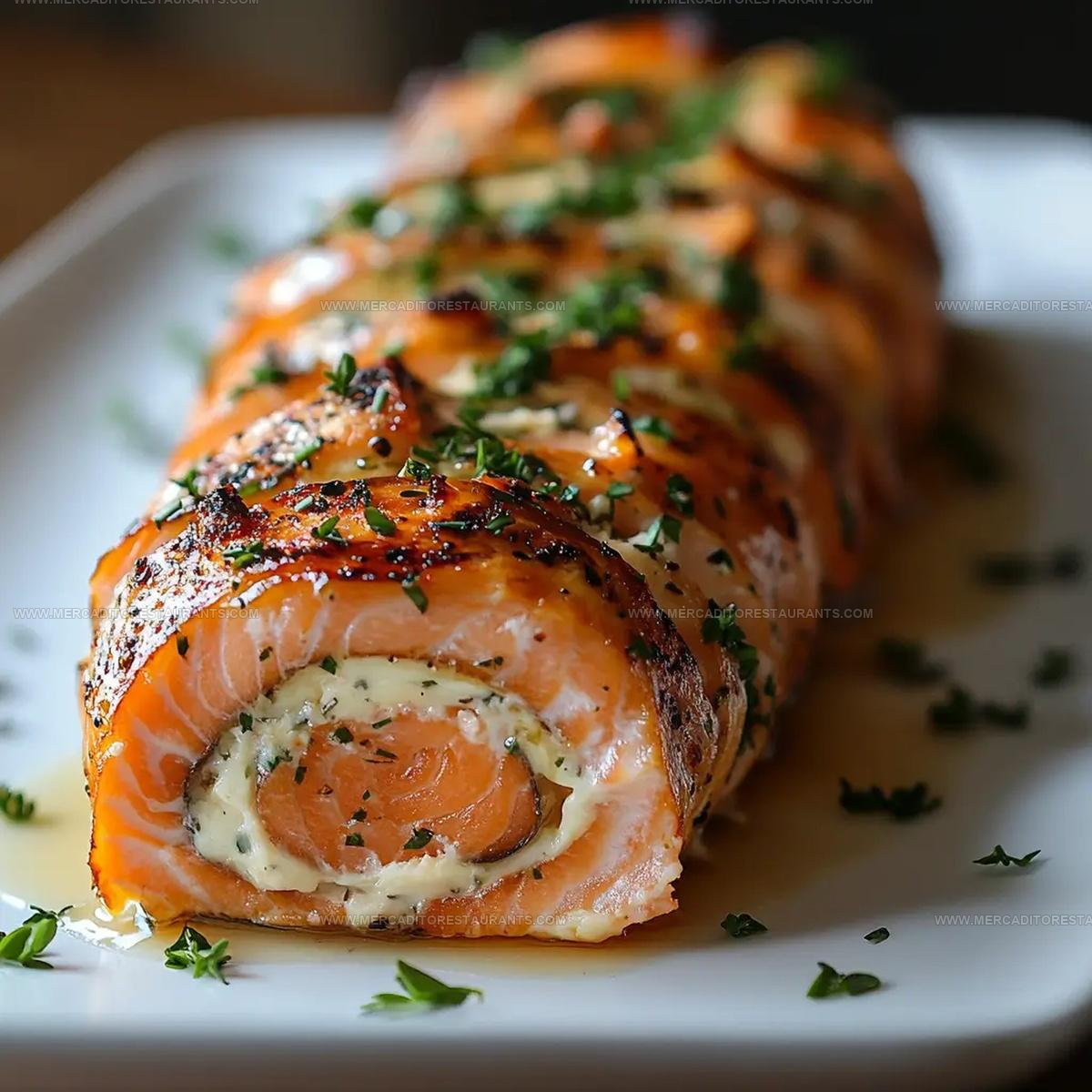
Baked Salmon Roulade Recipe That Makes Dinner Elegant

Salmon roulades promise pure seafood sophistication with minimal effort.
Elegant dinner parties suddenly feel achievable when you master this stunning centerpiece.
Professional chefs might seem to have exclusive secrets, but confident home cooks can easily replicate restaurant-quality results.
Delicate fish wrapped into beautiful rolls creates impressive visual appeal that matches incredible flavor profiles.
Succulent salmon transforms simple ingredients into something remarkably special for memorable meals.
Weeknight dinners and special celebrations deserve stunning presentations that surprise and delight guests.
Preparing salmon roulades signals your confidence in the kitchen while promising exceptional dining experiences.
Standout Features Of Baked Salmon Roulade
Essential Ingredients For Baked Salmon Roulade
Protein:Dairy and Filling:Supporting Ingredients:Essential Kitchen Tools for Baked Salmon Roulade
How to Make Baked Salmon Roulade
Preheat the Oven
Crank up your oven to 375°F and grab a baking sheet. Line it with parchment paper so nothing sticks – trust me, cleanup will be a breeze.
Prepare the Salmon
Butterfly those salmon fillets with a sharp knife. You want a nice, flat surface that’ll roll up easily. Sprinkle salt and pepper generously across each piece.
Make the Creamy Filling
Time to mix up something delicious. Grab a bowl and combine these ingredients:
Blend everything until it looks smooth and creamy.
Spread the Filling
Dollop that creamy mixture onto each salmon fillet. Leave a tiny border around the edges – this keeps the filling from turning into a messy leak.
Roll Up the Salmon
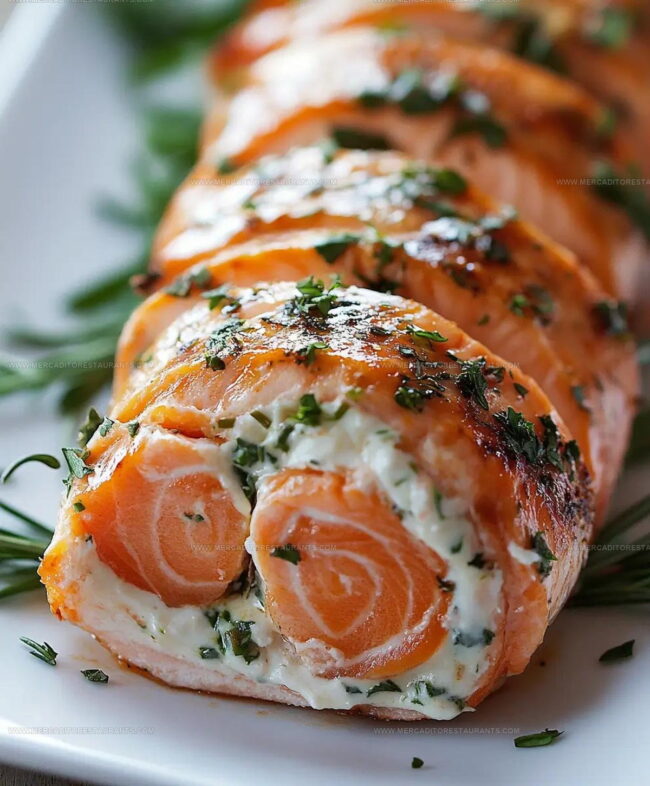
Carefully roll each fillet into a tight cylinder. Tuck in the sides to keep all that tasty filling locked inside.
Secure and Oil
Grab some kitchen twine and tie up those roulades to keep their shape. Drizzle 1 tablespoon of olive oil on top to help them get a beautiful golden finish.
Bake to Perfection
Slide the baking sheet into the 375°F oven. Bake for exactly 22 minutes. Make sure the internal temperature hits 145°F – this guarantees perfectly cooked salmon.
Rest and Serve
Pull the roulades out and let them rest for 3-4 minutes. This helps the juices settle. Slice into elegant 1-inch rounds and get ready to impress your dinner guests.
A Few Helpful Notes For Baked Salmon Roulades
Flavor Variations for Baked Salmon Roulade
How To Slice And Serve Baked Salmon Roulade
Storage And Reheating Notes For Baked Salmon Roulade
Baked Salmon Roulade Common Questions
Can I make this recipe ahead of time?
Absolutely prepare the salmon roulades up to the point of rolling and tying, then refrigerate them covered for several hours before baking. Just add 2-3 extra minutes to your cooking time when baking directly from the refrigerator.
What if my salmon doesn’t butterfly evenly?
A sharp knife and steady hand help, but you can also ask your fishmonger to butterfly the fillets for you. They’re experts at creating uniform surfaces perfect for rolling.
Are there alternatives to fresh dill?
Dried dill works perfectly if fresh isn’t available. Use about 1 teaspoon of dried dill instead of the fresh version to maintain balanced flavor.
How do I know my roulade is fully cooked?
Check the internal temperature with a meat thermometer – it should read exactly 145°F. The salmon will look opaque and flake easily when properly done.
Can I freeze these salmon roulades?
Wrap each unbaked roulade tightly in plastic wrap, then aluminum foil. Freeze for up to one month. Thaw overnight in the refrigerator before baking.
What type of salmon works best?
Wild-caught salmon like sockeye or king salmon deliver the most robust flavor and firmest texture for this recipe.
Baked Salmon Roulade Recipe
- Total Time: 35-40 minutes
- Yield: 4 1x
Description
Salmon Roulade brings delicate flavors together in a beautiful rolled fish dish that wraps tender salmon around a creamy herb filling. Serve this elegant entrée with a crisp white wine and watch your dinner guests smile with delight.
Ingredients
Protein:
- 4 skinless salmon fillets
Dairy and Filling:
- 8 ounces cream cheese
- 1 cup fresh spinach
Supporting Ingredients:
- 2 cloves garlic
- 1 tablespoon Dijon mustard
- 1 tablespoon lemon zest
- 1 teaspoon fresh dill
- Salt
- Pepper
- Olive oil
Instructions
- Heat your oven to 375°F and line a baking sheet with parchment paper so your salmon won’t stick.
- Butterfly your salmon fillets to create an even surface, ensuring each piece can roll smoothly. Season generously with salt and pepper.
- Combine 8 oz cream cheese with 1 cup chopped spinach, 2 minced garlic cloves, 1 tbsp Dijon mustard, 1 tbsp lemon zest, and 1 tsp fresh dill in a mixing bowl until the mixture looks creamy and well-blended.
- Spread your cream cheese mixture across each salmon fillet, leaving a small border around the edges. This prevents filling from oozing out during cooking.
- Carefully roll each salmon fillet into a tight cylindrical shape, tucking the sides inward to keep the filling secure.
- Secure your salmon roulades with kitchen twine to maintain their shape during baking. Drizzle 1 tbsp olive oil over the top to help them brown nicely.
- Place roulades in the preheated oven and bake for exactly 22 minutes, checking that salmon reaches an internal temperature of 145°F.
- Remove from oven and let the roulades rest for 3-4 minutes to allow juices to redistribute. Slice into elegant 1-inch rounds before serving.
Notes
- Let the salmon come to room temperature before rolling to ensure even cooking and prevent breaking.
- Use thin, flexible kitchen twine and tie the roulades loosely to keep the filling from squeezing out during baking.
- Check salmon’s doneness by inserting a thermometer into the thickest part – it should read 145°F for perfect, flaky texture.
- For a gluten-free option, replace Dijon mustard with a mustard that’s certified gluten-free, and verify cream cheese ingredients.
- Prep Time: 15 minutes
- Cook Time: 20-25 minutes
- Category: Baked
- Method: Baking
- Cuisine: American
Nutrition
- Serving Size: 4
- Calories: 430 kcal
- Sugar: 2 g
- Sodium: 350 mg
- Fat: 30 g
- Saturated Fat: 10 g
- Unsaturated Fat: 18 g
- Trans Fat: 0 g
- Carbohydrates: 5 g
- Fiber: 1 g
- Protein: 35 g
- Cholesterol: 90 mg
Daniel Navarro
Culinary Content Director
Expertise
Mexican-inspired Menus, Seasonal Restaurant Specials, Shared Plate Dining, Tequila Pairings, Chef-driven Recipes
Education
Daniel writes about bold flavors, chef-driven dishes, and the kind of restaurant moments that turn tacos, mezcal, and shared plates into a night worth repeating.